
The story
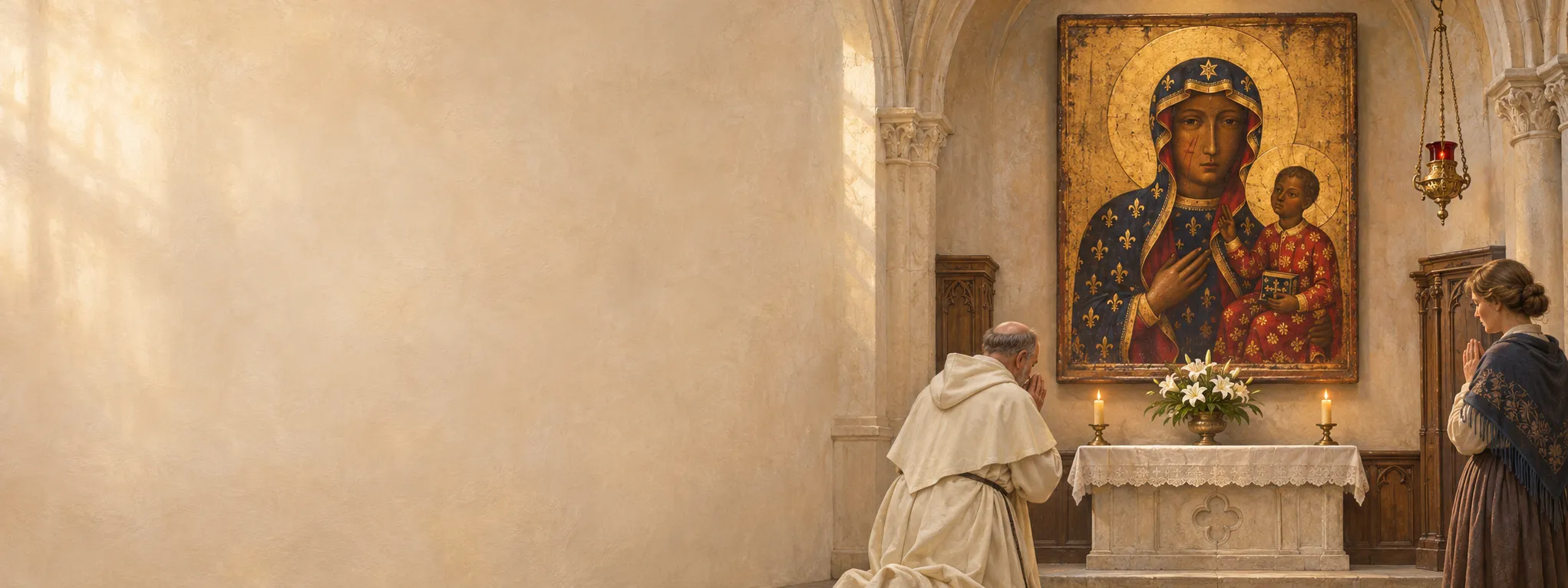
This shrine rests not on an apparition but on the beloved Black Madonna, an icon that tradition attributes to St. Luke, which Prince Władysław of Opole gave to the Pauline monks of Jasna Góra around 1382 to 1384.
- 1430
Raiders attacked the monastery and slashed the icon. The scars on her right cheek remain.
- Winter 1655
A small force of monks and local volunteers held off a much larger Swedish army during the Deluge.
- April 1, 1656
King John II Casimir proclaimed Mary Queen of Poland in his Lwów Oath.
What the Church has said
Clement XI decreed the icon's canonical coronation in 1717. Popes have given crowns or golden roses, including John Paul II, Benedict XVI and Francis.
History and debate
Scholars still discuss the icon's date and origin. Art historians have placed it as a Byzantine work from the 6th to the 9th century, or later. The attribution to St. Luke rests on tradition, and accounts of the 1655 siege vary in their numbers.
Visiting today
Jasna Góra Monastery in Częstochowa is Poland's most visited shrine. Since 1711, a walking pilgrimage has left Warsaw every August 6.
Sources
Last reviewed: November 1, 2026