
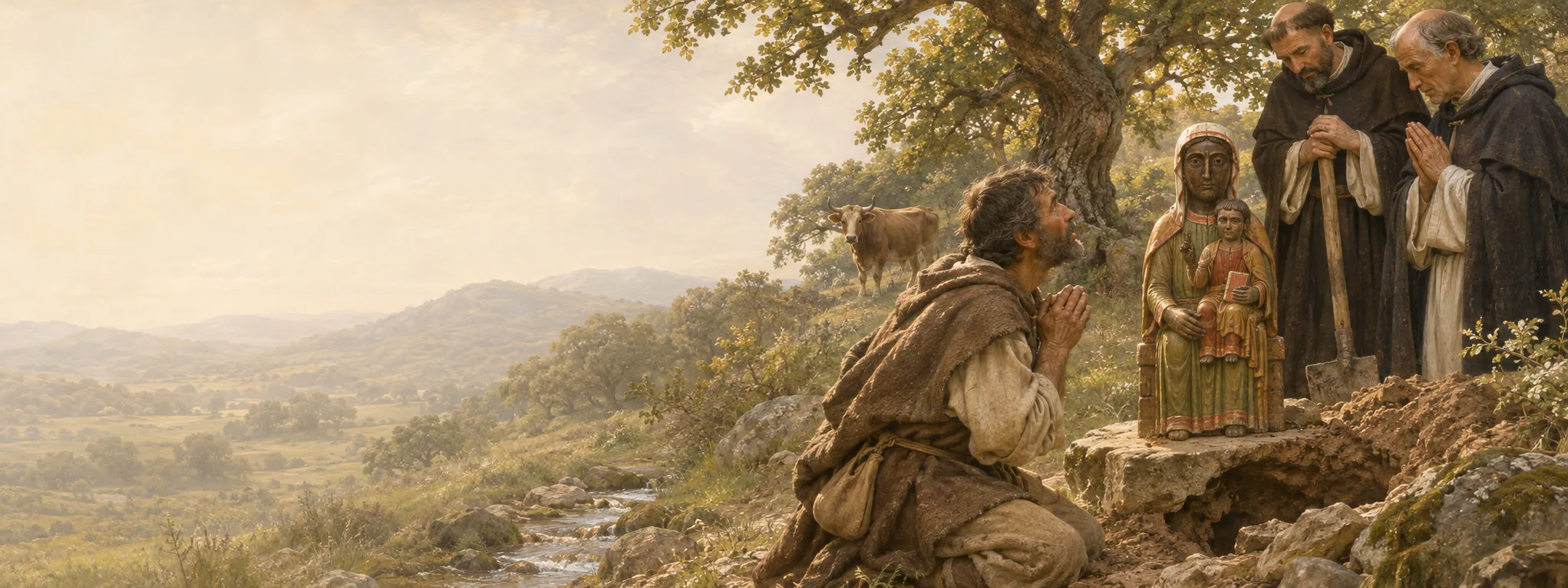
The story
Tradition holds that in the 13th century a herdsman searching for a lost cow near the Guadalupe River found a buried statue of Our Lady. Later versions name him Gil Cordero.
Tradition adds that King Alfonso XI of Castile found the hermitage while hunting in 1330 and prayed there before his victory at the Salado in 1340. He then built the great monastery in thanksgiving.
What the Church has said
The image was canonically crowned on October 12, 1928, and Pius XII made the church a minor basilica in 1955.
History and debate
This is a separate devotion from Our Lady of Guadalupe in Mexico, and the reason the two share a name is debated. The image is dated between the late 12th century and later, and a study in the Journal of Ecclesiastical History notes that the herdsman is unnamed in the earliest tradition, so the name Gil Cordero rests on questionable evidence.
Visiting today
The Royal Monastery of Santa María de Guadalupe, in the province of Cáceres, is a UNESCO World Heritage Site and has been served by Franciscans since the early 20th century.
Sources
Last reviewed: November 1, 2026