
The story
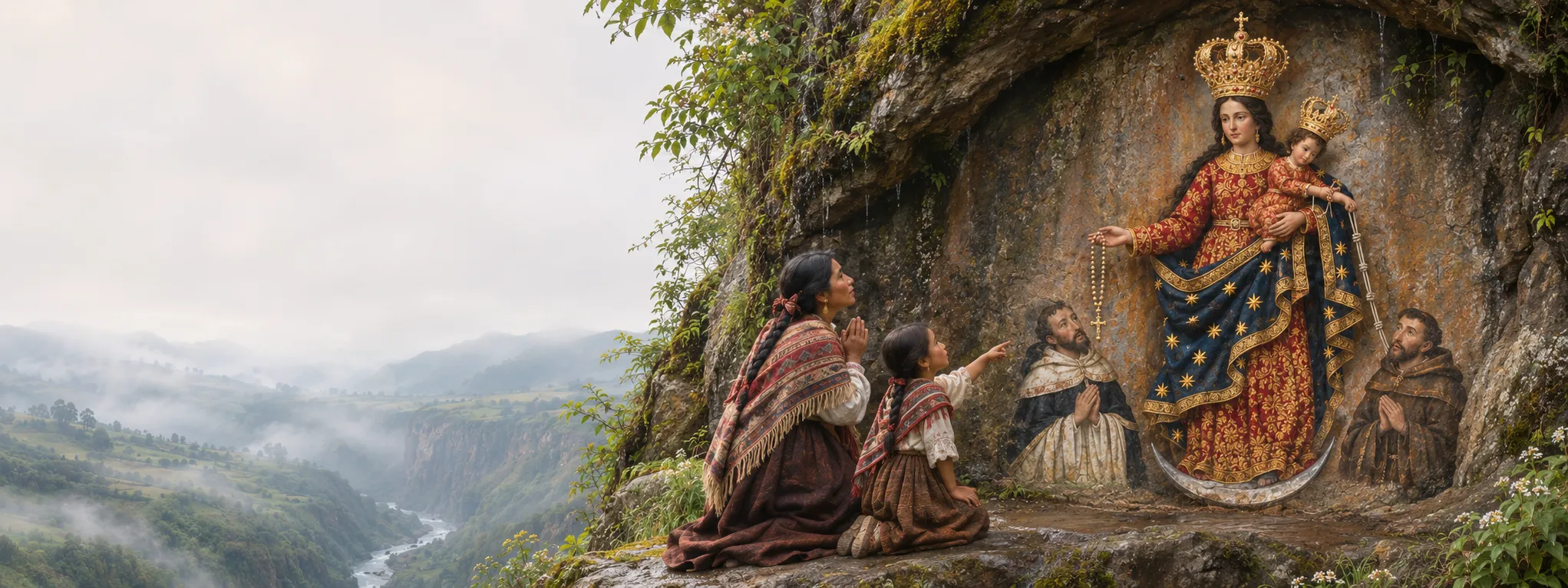
Tradition holds that in 1754, María Mueses de Quiñones and her deaf-mute daughter Rosa took shelter from a storm in the canyon of the Guáitara River, and the girl pointed to a figure on the rock and spoke. In one version, Rosa later died and was restored to life when her mother returned to pray.
A figure of the Virgin on the rock face behind the altar became the center of devotion. Its origin is unknown, and a claim that it extends several feet into the stone has not been verified.
What the Church has said
Pius XII's decree of May 31, 1951, authorized the coronation of the image, which took place on September 16, 1952. The shrine became a minor basilica on August 30, 1954, and Paul VI named the image principal patroness of the Diocese of Ipiales in 1965. No formal ruling on the apparition has been located.
History and debate
The names, the girl's age and the details of the miracle vary between accounts, which are mostly devotional or travel writing, with no scholarly history located.
Visiting today
The neo-Gothic Sanctuary of Las Lajas spans the Guáitara canyon near Ipiales, Colombia, close to the Ecuadorian border. It was built from 1916, on a site that held earlier shrines of straw, wood and brick.
Sources
Last reviewed: November 1, 2026