
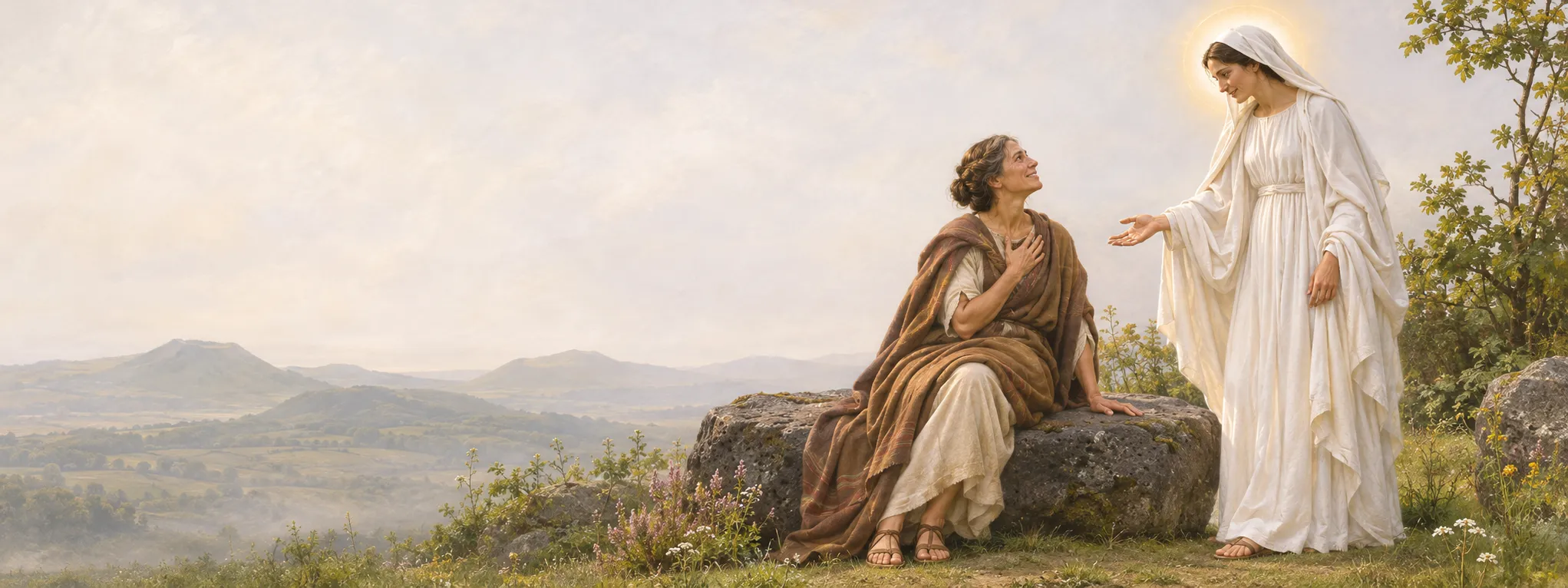
The story
Tradition tells of a woman named Vila with a high fever who was carried to Mount Anicius and healed while lying on a stone slab, where Our Lady appeared to her. Sources date it anywhere from the 1st to the 5th century.
Saint Scutarius is credited with building the first cathedral between 415 and 430, and with placing the stone inside it.
History and debate
This tradition crowns an ancient pilgrimage, though no record from the time survives. No Church ruling on an apparition has been located. The stone is thought to be a remnant of a pre-Christian dolmen.
Visiting today
The Cathedral of Notre-Dame du Puy-en-Velay shows the Fever Stone. The original Black Virgin was burned in 1794, and a replacement statue was crowned on June 8, 1856. The town is also a starting point of the Camino de Santiago in France.
Sources
Last reviewed: November 1, 2026