
The story
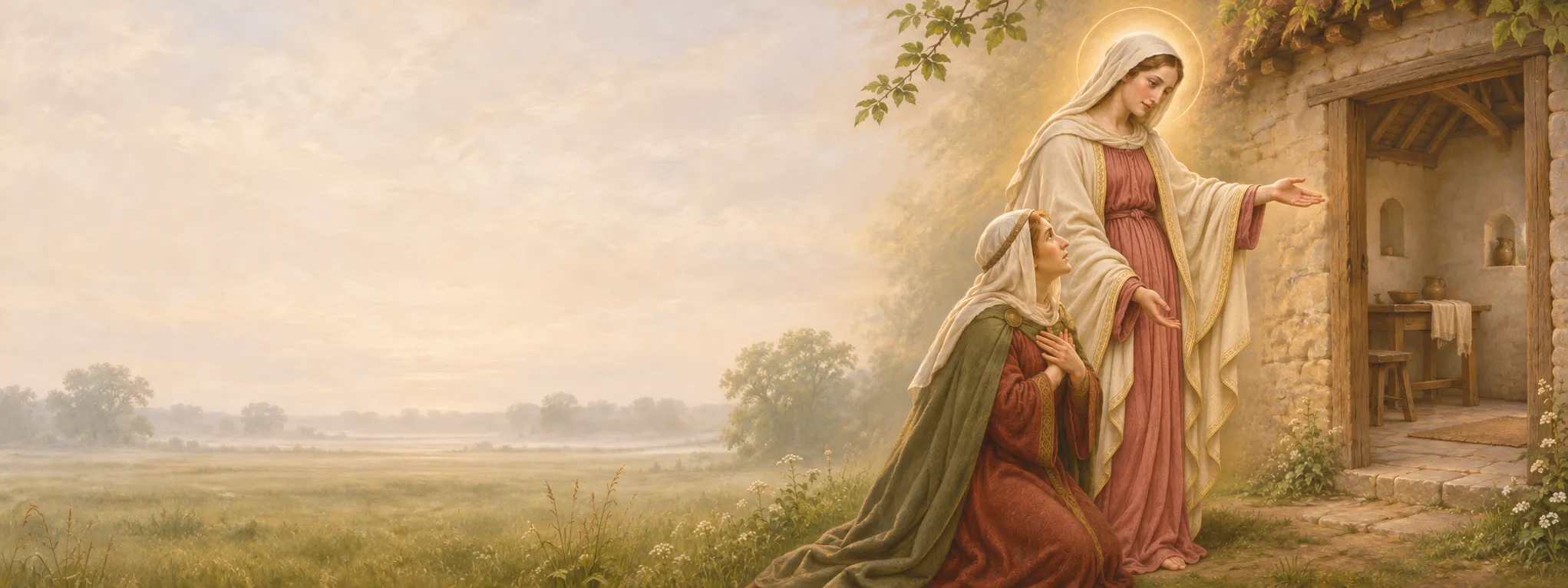
Tradition holds that in 1061 Richeldis de Faverches, a noblewoman and widow, had visions in which Our Lady showed her the Holy House of Nazareth and asked for a replica at Walsingham in Norfolk. The shrine became one of medieval England's great pilgrimages, with royal visitors, under Augustinian canons.
The priory was suppressed in 1538. The statue was taken to London, and no eyewitness account of its fate survives. Some scholars have argued in recent years that it may be the Langham Madonna in the Victoria and Albert Museum.
What the Church has said
The Slipper Chapel was declared the Catholic national shrine in 1934, and the statue was crowned in 1954 on behalf of Pius XII. These honor the shrine and devotion. No formal ruling on the apparition has been located.
History and debate
The 1061 date comes from the Pynson Ballad of about 1485. The historian J. C. Dickinson argued in 1959 that the shrine was founded later, probably between 1130 and 1153. The chapel is first documented in a 12th-century grant by Geoffrey de Faverches.
Visiting today
The Catholic Slipper Chapel, built in 1340, is at Houghton St. Giles and is part of a minor basilica since December 27, 2015. An Anglican shrine with a replica Holy House stands in the village, begun in the 1930s.
Sources
Last reviewed: November 1, 2026